

The DIY band's social media playbook
Social media for musicians can feel like a second job.
You are expected to rehearse, write, record, book shows, answer messages and somehow produce a constant stream of videos for several different platforms. When every post is created at the last minute, social media quickly becomes another source of pressure rather than something that helps the band grow.
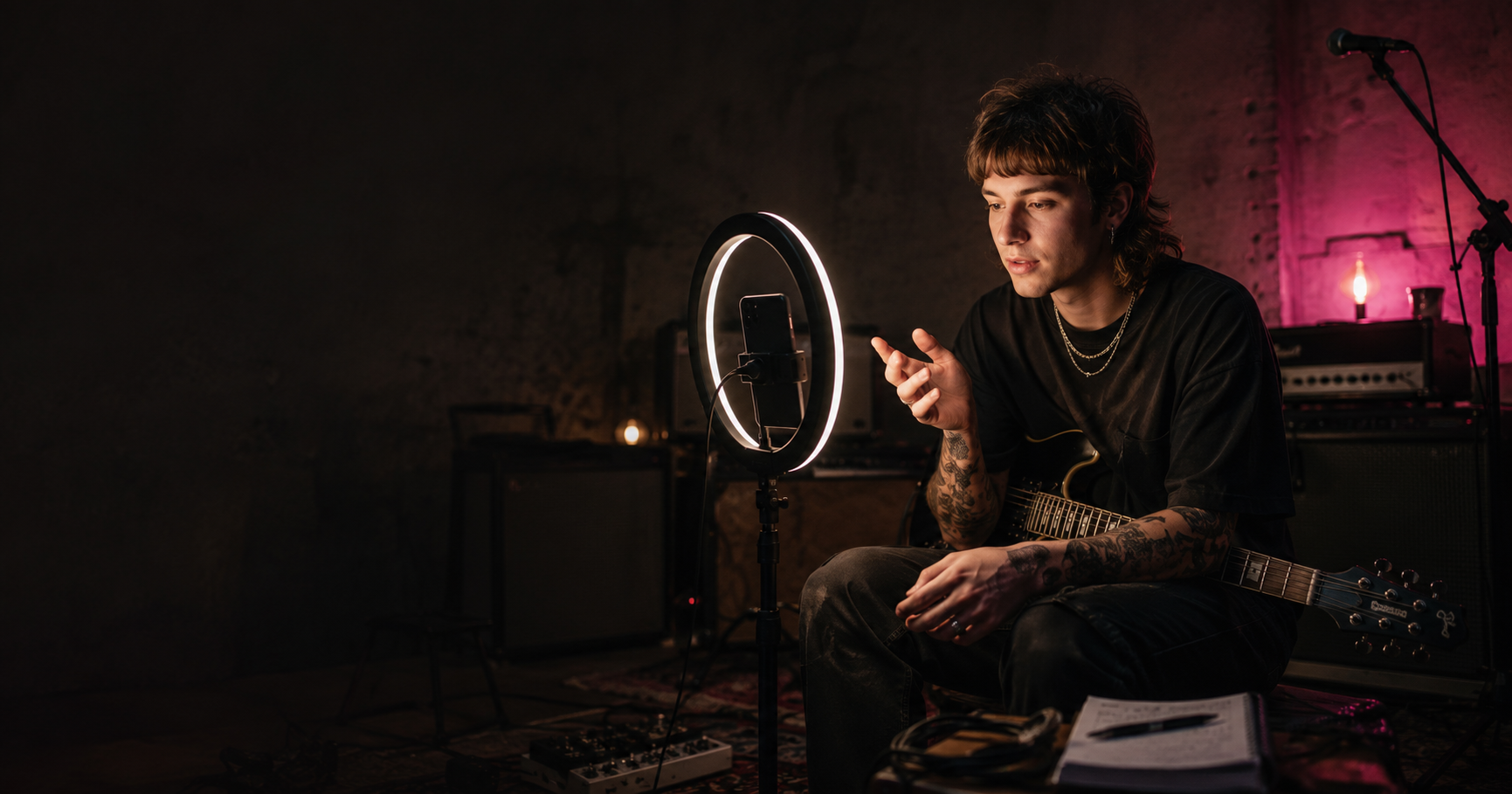
It does not need to work that way.
A useful band social media strategy is not built around posting everywhere every day. It is built around choosing the right platform, repeating a manageable content mix and giving people a clear next step after they discover you.
This playbook will help you decide what to post, create a weekly rhythm your band can maintain and turn casual views into actual fans, mailing-list sign-ups and ticket sales.
Start with one home platform
One platform done well will usually help your band more than five neglected profiles.
That does not mean deleting every other account. It means deciding where your best content will appear first and where your band will spend most of its time engaging with people.
Treat that platform as your home base.
Your choice should depend on the kind of content your band can create consistently and where your existing audience already responds.
- Instagram may work well when your band has strong photography, artwork, short videos and an active local scene.
- TikTok may suit bands that are comfortable sharing frequent, informal videos and experimenting with different ideas.
- YouTube is useful when performances, music videos, studio footage and longer-lasting searchable content are important.
- Facebook can still be valuable for local events, established communities, venue promotion and audiences that actively follow gig listings.
Do not choose a platform only because another band went viral there. Choose the one your band can realistically support for the next six months.
Once you have selected your home base, keep the other accounts active by adapting and republishing your strongest material. A rehearsal clip can become an Instagram Reel, a TikTok, a YouTube Short and a Facebook post without requiring four completely different ideas.
The goal is not to be equally active everywhere. The goal is to create one reliable content system and distribute it intelligently.
Use a simple content mix
A band account becomes repetitive when every post says the same thing:
New single out now. Link in bio.
Fans need reminders about releases and shows, but promotion works better when it is surrounded by content that gives people a reason to care.
A practical weekly content mix for a DIY band is:
- Two behind-the-scenes posts
- One live or performance clip
- One release or show-related moment
- One fan or community post
That gives you a simple 2–1–1–1 ratio.
You do not necessarily need five polished feed posts. Some of these can be Stories, short updates or reposts. The ratio is there to keep your content balanced, not to create another rigid target.
Behind-the-scenes content
Behind-the-scenes posts make the band feel active and human.
They can include:
- A new riff being tested at rehearsal
- A short studio update
- Setting up equipment before a show
- A songwriting voice memo
- The band discussing artwork or a setlist
- A mistake, outtake or moment that would normally stay off-camera
- A member explaining one part of a song
This content does not need a major announcement attached to it. Its purpose is to bring people into the process.
A slightly rough phone video will often feel more natural than a heavily edited promotional clip. Good lighting and clear audio help, but authenticity matters more than making every rehearsal look like a professional video shoot.
Live clips
Live footage shows that the band exists beyond the profile.
It provides social proof, introduces your performance energy and helps potential fans imagine attending a show. It can also be useful when promoters, venues or other bands look through your account.
You do not need a professionally filmed concert every week. Use:
- A strong chorus captured from the audience
- A close-up of a memorable guitar, drum or vocal moment
- A crowd reaction
- A soundcheck clip
- A short before-and-after sequence
- Footage from an older show connected to an upcoming date
Keep most clips focused on one moment rather than trying to summarise the entire performance.
Release and show moments
Promotional content should tell people exactly what is happening and what they should do next.
Examples include:
- A single announcement
- An artwork reveal
- A pre-save or pre-order post
- A music-video teaser
- A release-day post
- A show announcement
- A ticket reminder
- A venue or support-band introduction
- A final reminder on the day of the show
Avoid squeezing three different actions into one caption. Asking someone to stream a track, buy a ticket, follow the band and join a mailing list at the same time weakens every request.
Choose the most important next step and make it obvious.
Fan and community posts
Social media should not feel like the band broadcasting into an empty room.
Repost fan photos, share tagged Stories, thank people after shows and highlight the other bands, venues, photographers and organisers involved in your scene.
Always ask for permission before using someone else’s photo as a permanent feed post, and credit the creator clearly.
Community content helps your account feel connected to something larger than the band itself. It also gives other people a reason to share your posts with their audiences.
For more examples, read content ideas for musicians.
Build a weekly posting rhythm you can keep
The best schedule is not the one with the highest number of posts. It is the one the band can continue after release week is over.
A realistic starting rhythm is three core posts and two lighter touchpoints each week.
Monday: behind the scenes
Post a rehearsal clip, studio update or quick look at what the band is working on.
This starts the week with something informal and does not require a major announcement.
Wednesday: music or performance
Share a live clip, playthrough, lyric moment or section of a track.
Make the music the main event. The caption can add context, but the post should still work for someone seeing the band for the first time.
Friday: your current priority
Use this post for the action that matters most that week:
- Stream the new single
- Watch the video
- Buy a ticket
- Pre-save the release
- Check the new merchandise
- Join the mailing list
This is your clearest conversion-focused post.
Weekend: fan or scene repost
Share a tagged photo, audience video, venue announcement or post from another band on the bill.
This can be a Story rather than a permanent feed post.
Flexible extra: another process moment
Use one additional Story or short video for something happening naturally: loading the van, changing strings, receiving merchandise or arguing over the setlist.
This rhythm gives your band structure without requiring a polished post every day.
It is also flexible. During a release campaign, the Friday promotional post might expand into several release moments. During a quiet writing period, behind-the-scenes material can take a larger role.
The categories stay consistent even when the details change.
For a deeper breakdown of frequency and consistency, read how often musicians should post on social media.
Create repeatable formats, not endless new ideas
A sustainable music social media marketing system uses formats that can be repeated.
For example:
- Riff of the week
- One minute from rehearsal
- What this lyric means
- The gear behind the song
- The story behind this show
- Three questions with a band member
- From demo to final version
- What went wrong at the last gig
A repeatable format removes the pressure to invent a completely new concept every time you open the camera.
It also helps followers understand what to expect. When a format works, keep it. Change the song, member, location or question rather than replacing the whole idea.
You can create a basic template for each format:
- A recognisable opening
- One clear subject
- A short payoff
- One relevant next step
For example:
We nearly removed this riff from the song. Here is the demo version, followed by the final recording. Which one would you have kept?
The next post can use exactly the same structure with a different song.
Capture content while the band is already together
Do not arrange a separate content day every time you need a post.
The easiest way to create material consistently is to capture it during work the band is already doing.
At rehearsal
Aim to collect:
- One full-song performance angle
- Two or three short vertical clips
- One member talking to the camera
- A few photos
- One genuinely unplanned moment
At a show
Collect:
- Arrival or load-in footage
- A short soundcheck clip
- Two strong live moments
- A crowd shot
- A post-show reaction
At the studio
Capture:
- Instrument or vocal takes
- Control-room footage
- Before-and-after audio comparisons
- A short explanation from each member
- Photos of the setup and recording process
Assign one person to remember, but do not make that person responsible for everything. Rotate the role or create a shared folder where every member can upload usable photos and videos.
One rehearsal can provide enough material for several weeks when clips are captured vertically, labelled and saved somewhere everyone can find them.
Turn views into something the band owns
Views are useful, but they are not the final objective.
Social platforms can change their reach, formats and algorithms. Your relationship with the audience becomes more valuable when people take an action outside the feed.
That action might be:
- Joining your email list
- Buying a ticket
- Streaming or purchasing a release
- Following your band on a second platform
- Visiting your merchandise store
- Saving an upcoming show
- Sharing your music with someone else
Every week, choose one main conversion goal.
If your next show is the priority, most calls to action should lead to the ticket page. If a release is approaching, focus on the pre-save, mailing list or release page.
Give people one clear destination
Your profile link should not lead people into a maze.
The destination should make the current priority easy to find and give new listeners enough context to explore further. Depending on your campaign, that page might feature:
- Your next show and ticket link
- Your latest release
- A mailing-list sign-up form
- Your music and social links
- Photos and a band biography
- Contact information
- Your electronic press kit
Band Social gives bands a public page that can include upcoming events, ticket links, music embeds, contact details and a downloadable electronic press kit. Page analytics help you understand which channels are sending people beyond the social feed.
Match the post to the destination
Do not send someone from a specific ticket post to a generic homepage where they must search for the show.
The journey should feel continuous:
- Live clip → show information → ticket page
- Studio teaser → release page → mailing-list or pre-save action
- Band introduction → public band page → music and follow links
The fewer decisions someone has to make, the more likely they are to complete the important one.
Measure actions, not only reach
Reach tells you how many accounts may have seen a post. It does not tell you whether the post helped the band.
Track:
- Profile visits
- Link clicks
- Mailing-list sign-ups
- Ticket-page visits
- Ticket sales
- Saves and shares
- Direct messages about shows or music
A post with 800 views and 20 ticket clicks may be more valuable than one with 20,000 views and no measurable action.
Do not judge every post individually. Review patterns across several weeks. You are looking for formats, subjects and calls to action that repeatedly move people closer to the band.
Schedule ahead and remove the daily pressure
Scheduling does not make your posts less authentic. It gives the band time to be more intentional.
Instead of deciding what to publish every afternoon, set aside one short planning session each week or one longer session each month.
A simple batching workflow looks like this:
- Review upcoming releases, shows and deadlines.
- Choose the main goal for each week.
- Select clips and photos you have already captured.
- Draft the captions.
- Adapt them for the platforms you use.
- Schedule the finished posts.
- Leave room for spontaneous updates and fan reposts.
You can prepare the planned part of your content while keeping spontaneous posts genuinely spontaneous.
Band Social lets bands create content for selected Facebook, Instagram, TikTok and YouTube accounts, save drafts, choose publication dates and manage scheduled posts from a shared content calendar.
Your release reminders and regular weekly posts can be prepared together rather than rebuilt one day at a time.
Explore Band Social’s social media scheduling features.
Scheduling also makes it easier to divide responsibilities. One member can upload media, another can draft captions and someone else can review the calendar before anything goes live.
The result is not necessarily more content. It is fewer missed announcements, fewer rushed captions and less pressure hanging over the band every day.
A 60-minute weekly social media workflow
Use this routine to keep the entire system moving.
First 10 minutes: decide the goal
What matters most this week?
Choose one:
- Promote a show
- Support a release
- Grow the mailing list
- Reconnect with followers
- Introduce the band to new listeners
Next 15 minutes: choose the content
Select:
- One behind-the-scenes clip
- One performance clip
- One promotional asset
- One fan or community post
- One optional Story
Use material you have already captured before planning another shoot.
Next 20 minutes: write and adapt
Write the main version of each caption, then adjust the opening, length and call to action where necessary.
Do not rewrite everything from zero for every platform.
Final 15 minutes: schedule and check
Add the posts to your calendar and verify:
- Dates and times
- Links
- Tagged accounts
- Spelling of venue and band names
- Media format
- The main call to action
Once scheduled, the rest of the week can focus on replying to people, reposting fans and sharing moments that could not have been planned.
Your band does not need to become a content company
The purpose of social media is not to keep musicians permanently online.
It is to help the right people discover the band, remember it and take the next step.
A sustainable strategy is enough:
- Choose one home platform.
- Use a balanced weekly content mix.
- Capture material during rehearsals, shows and studio sessions.
- Repeat formats instead of inventing everything from scratch.
- Give each promotional post one clear action.
- Move followers towards an email list, release or ticket page.
- Schedule the planned content before the week becomes busy.
Start with three useful posts next week. You can increase the volume later when the process feels manageable and the results justify it.
Consistency does not mean posting every day. It means building a system the band can still follow when rehearsals run late, the van needs repairing and release week gets complicated.
Run your band on Band Social
Publishing, scheduling and press kit with Social; venues, outreach and tour money with Booking.
Start free